


ESG – Why It Matters?
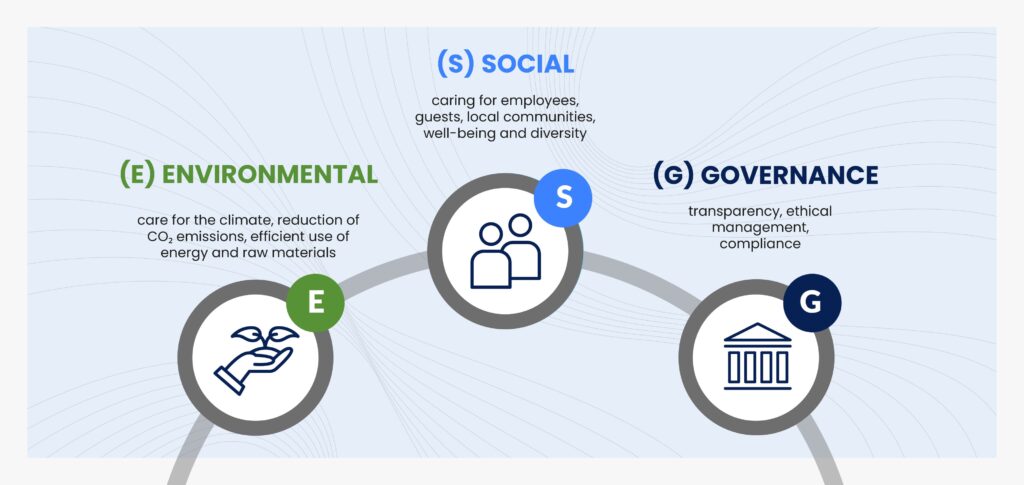
ESG stands for Environmental, Social, Governance – the three pillars of responsible business:
- E (Environmental) – climate protection, CO₂ reduction, efficient use of energy and resources.
- S (Social) – care for employees, visitors, local communities, well-being, and diversity.
- G (Governance) – transparency, ethical management, and compliance.
Today, investors, customers, and employees look beyond financial performance—they also evaluate a company’s impact on its environment and stakeholders. Smart Office is becoming a key tool that meaningfully supports ESG objectives.
Smart Office in Practice – Supporting E (Environmental)
1. Efficient Use of Office Space
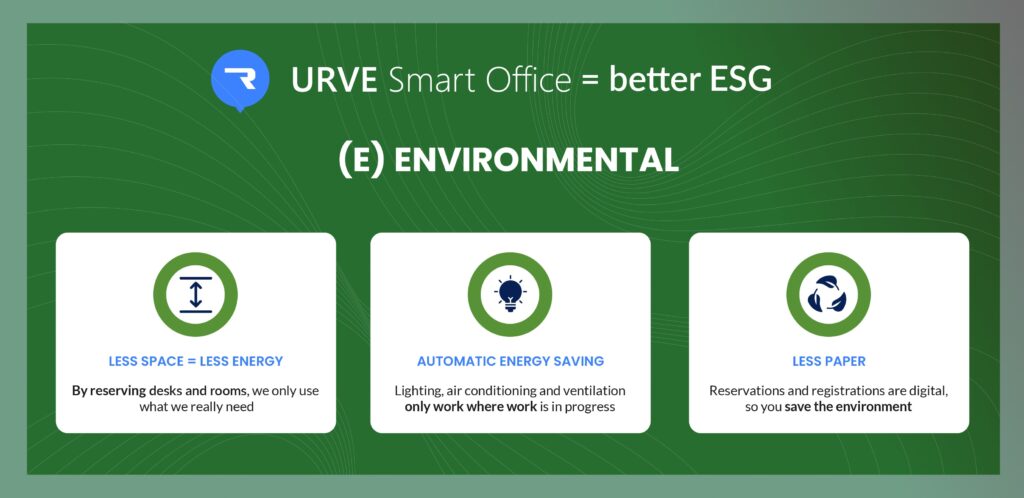
Through modules such as Smart Desk and Smart Room, managers gain insights into the actual utilization of desks and meeting rooms. This enables workspace reduction, resulting in:
- lower energy consumption,
- reduced air-conditioning, heating, and cleaning costs,
- a smaller carbon footprint.
2. Energy Consumption Optimization
Integrating Smart Office with Building Management Systems (BMS) enables automated control of lighting, ventilation, and HVAC—only where people are actually working.
3. Less Paper, More Digitalization
Room bookings, visitor management, and locker registration happen digitally, reducing the need for printed forms and schedules.
4. Alternative Transportation Options
By facilitating access to bicycles and scooters, Smart More encourages environmentally friendly commuting, contributing to lower emissions.
5. Informed Resource Management
Better fleet management helps reduce the total number of vehicles. Effective monitoring extends vehicle lifespan and decreases the demand for new raw materials.
Smart Office and S (Social) – Caring for People
1. Work Comfort and Well-Being
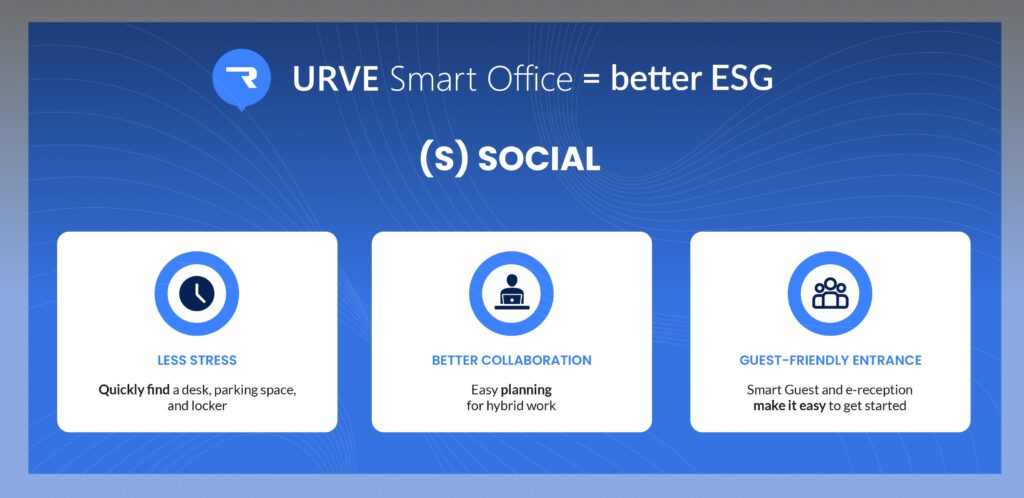
Employees no longer waste time searching for a free desk or parking spot. They can plan their day in advance, resulting in less stress and greater satisfaction. With appropriate configuration, parking solutions also become more accessible for people with various disabilities.
Easy access to secure personal storage (Smart Locker) improves comfort at work. Tracking locker access increases the security of personal belongings and the entire office.
2. Hybrid Work in Practice
Smart Office supports the hybrid model by simplifying team scheduling and meeting coordination—strengthening collaboration and workplace integration. Shared locker usage can also foster a sense of community. Process automation helps employees better manage their time and balance work and personal life.
3. Welcoming Visitors and New Employees
Smart Guest and digital reception streamline the visitor and onboarding processes—guests feel welcomed, and new employees adapt more quickly to the workspace.
Smart Office and G (Governance) – Transparency and Control
1. Data and Reporting
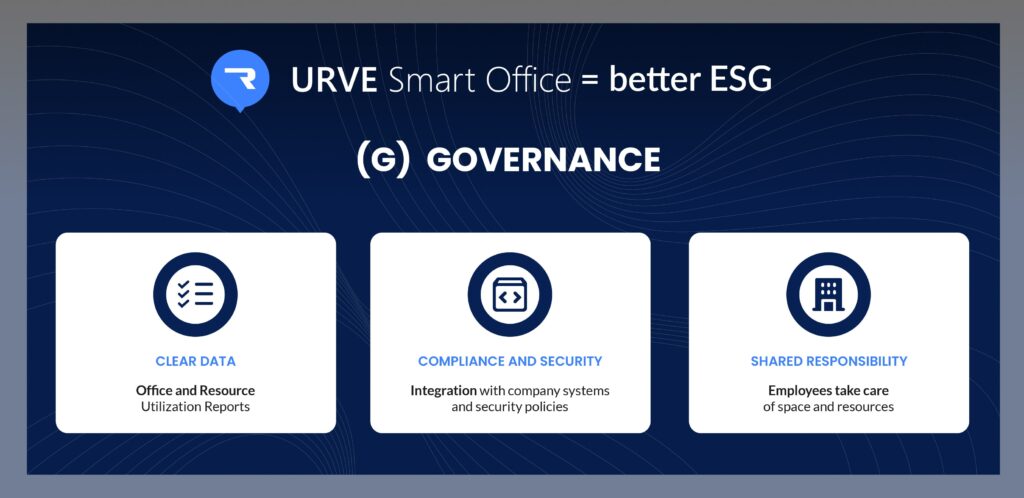
The system generates detailed resource utilization reports, supporting transparency and fact-based decision-making. This is increasingly important for ESG reporting requirements.
Comprehensive reports also make it easier to track meeting room rental costs (e.g., in conference centers), improving budgeting and financial management.
2. Regulation-Aligned Management
Integration with security systems (such as access control and Active Directory) helps maintain compliance with internal policies and data protection regulations.
Smart Locker streamlines administrative processes, reducing time spent resolving access issues and eliminating unnecessary bureaucracy.
3. Building a Culture of Responsibility
Smart Office encourages employees to share resources and take care of common spaces—promoting a culture of shared responsibility.
Smart Office and ESG Goals – Practical Examples
- 20% reduction of office space → lower energy use and reduced carbon footprint.
- Digital visitor management → elimination of paper logbooks.
- Desk occupancy reports → decision to reduce desk count and create relaxation areas.
- Smart Park → fewer cars circling for parking, resulting in reduced emissions.
Why It Pays Off
Smart Office supports ESG not only in terms of image but also business value:
- facilitates non-financial reporting,
- reduces operational costs,
- improves employee experience,
- supports certification processes (e.g., LEED, BREEAM, WELL).
Summary
Smart Office is more than a tool for booking desks and meeting rooms. It is a strategic solution that helps organizations achieve ESG goals. From reducing CO₂ emissions and improving employee well-being to enabling transparent reporting—an intelligent workplace is a real step toward sustainable development.

Business Development Coordinator