
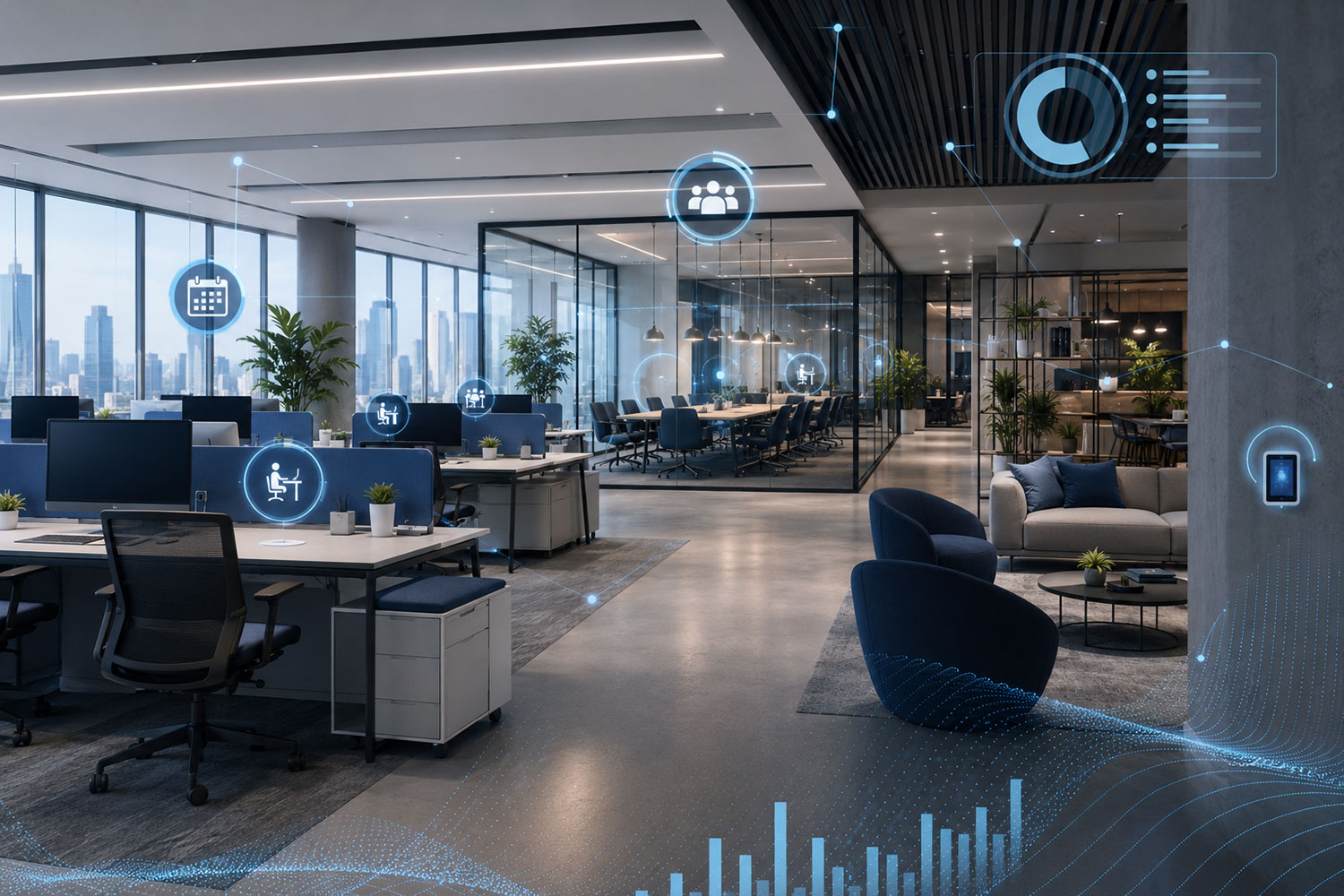
Modern offices are becoming increasingly complex ecosystems. Within a single building, there may be hundreds of employees, dozens of meeting rooms, parking areas, reception services, office resources, and technical infrastructure. In many organizations, each of these areas is managed using a different tool.
The result? Operational chaos, lack of data, and inefficient use of space.
That’s why more and more companies are implementing building management in one application – a Smart Office solution that integrates all workplace management processes into a single system.
Why is traditional office management no longer effective?
In many companies, office-related processes are fragmented:
- meeting room booking in Outlook
- desks managed in Excel
- parking in a separate system
- technical requests handled via email
- visitor management at the reception desk
Such an environment causes several serious problems.
Lack of control over space usage
Firmy często wynajmują więcej powierzchni niż potrzebują, ponieważ nie mają danych o realnym wykorzystaniu biurek czy sal.
Low employee productivity
Employees waste time on:
- looking for an available meeting room
- arranging a parking space
- finding an available desk
Lack of data for office optimization
Without data, it is difficult to make decisions regarding space reorganization or reducing office costs.
Smart Office – all office processes in one system
The solution is a Smart Office platform that combines all building management functions in one application.
Desk booking
The desk booking system allows employees to reserve desks only when they come to the office.
Benefits:
- office map
- team attendance planning
- space utilization analysis
Meeting room booking
A modern system allows:
- rezerwować sale z aplikacji
- synchronizować kalendarze
- monitorować wykorzystanie sal.
Parking management
Parking can be managed digitally through:
- parking space reservations
- visitor parking
- integration with barriers
- QR code or card access
Office resource management
Employees can also book other resources:
- IT equipment
- lockers
- project spaces
- coworking stations
Data that changes the way office management works
The greatest value of Smart Office systems is data on space utilization.
The platform collects information such as:
- desk usage
- meeting room occupancy
- parking turnover
- employee attendance
Based on this, companies can:
- reduce office space
- optimize the workspace layout
- lower operating costs
Building management in one application – integrations as the key to a true Smart Office
Building management systems can integrate with:
- Microsoft Teams
- Outlook
- access control systems
- parking systems
- IoT devices
Thanks to this, a single application becomes the hub for managing the entire office.
Building management in one application – FAQ
How does building management in one application work?
The system integrates all processes related to office operations: desk booking, meeting room booking, parking, resources, and visitor management. All functions are available from a single mobile or web application.
Can one application manage a desk, a meeting room, and parking?
Yes. Modern Smart Office systems enable simultaneous management of desks, meeting rooms, parking spaces, and office resources. This allows employees to plan their entire office day within a single application.
What features should an office management system have?
A good workplace management system should offer:
- desk booking
- meeting room booking
- parking management
- visitor management
- space utilization analytics
- integrations with calendars and access systems
Does an office management system help reduce costs?
Yes. Thanks to data analysis, companies can reduce unused office space, optimize parking, and better plan workspace layout.
Does an office management app work in hybrid work?
Yes. Smart Office systems are particularly useful in a hybrid work model, as they enable desk booking and planning team presence in the office.

Business Development Coordinator