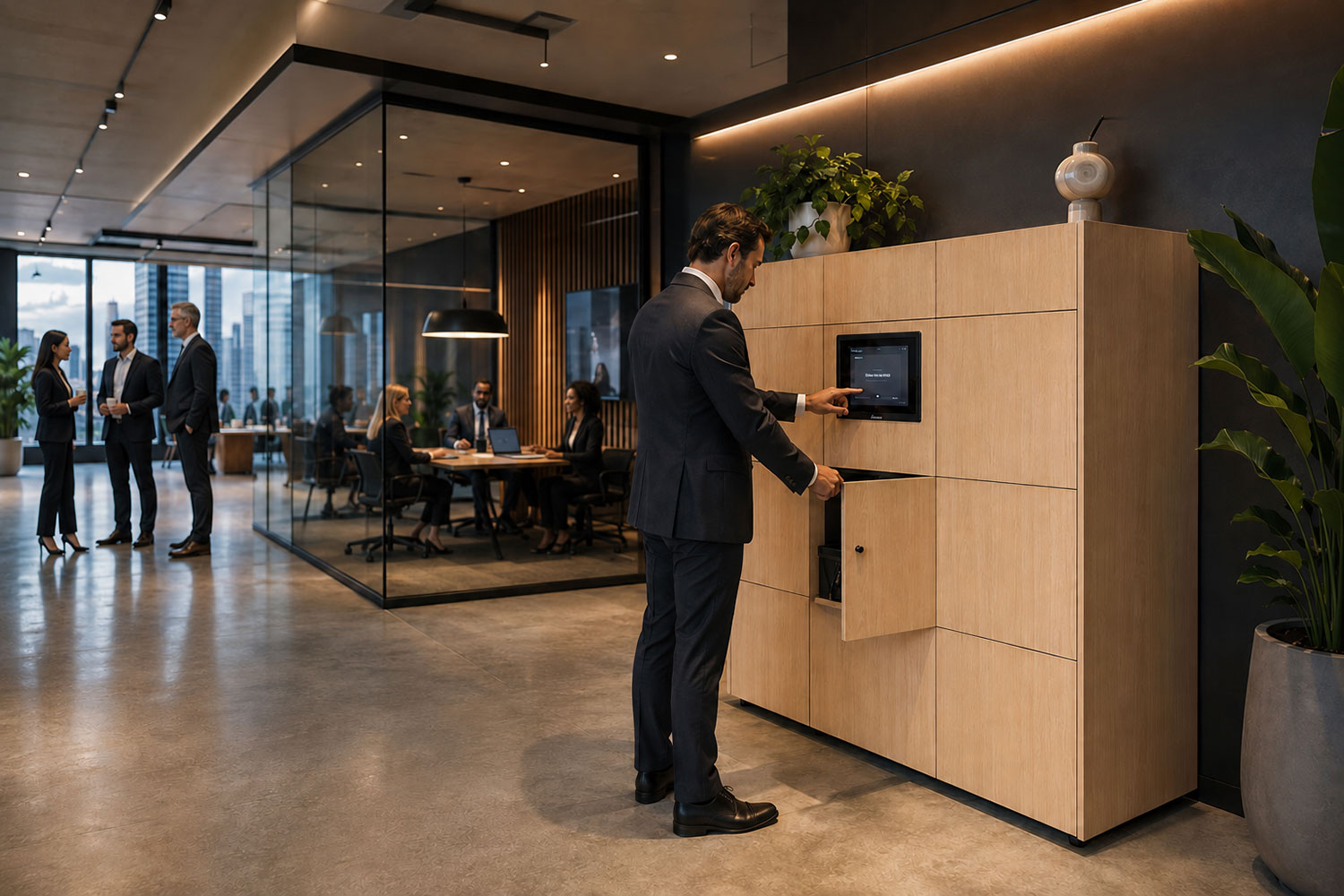
Smart Office is a response to the dynamic changes in modern workplaces. The hybrid work model, rising office space costs, and the need for better space management are driving companies to increasingly adopt new tools for organizing the workplace.
It is a technological system that enables the management of all office processes within a single application – from booking desks and meeting rooms to managing parking, resources, and building operations.
With Smart Office, companies can not only simplify employees’ daily work but also use office space much more efficiently.
What is a Smart Office system?
It is a digital platform for managing the office and the workplace.
The system integrates various areas of office operations:
- desk booking
- meeting room booking
- parking management
- office resource management
- visitor management
- service requests
- space utilization analytics
In practice, this means that an employee can, in a single application:
- book a desk
- check room availability
- invite a guest
- reserve a parking space
- report a technical issue
Why do companies implement Smart Office?
A few years ago, most companies managed their offices in a fragmented way. Individual processes were handled using different tools:
- calendars for booking meeting rooms
- Excel for desk management
- separate parking systems
- emails for reporting technical issues
Such a solution is inefficient and makes space management more difficult.
The system solves this problem by integrating all processes into a single platform.
The key benefits are:
- reduced office space costs
- improved employee experience
- access to office usage data
- automation of administrative processes
Desk Booking in a Smart Office
One of the key elements of these systems is desk booking, i.e. reserving desks.
The hybrid work model has meant that employees no longer come to the office every day. As a result, many companies have more desks than they actually need.
It allows you to:
- book desks for a specific day
- check where the team is sitting
- view the office map
- analyze workspace utilization
Thanks to this, companies can optimize office space and reduce rental costs.
Meeting Room Booking
Another feature of the platform is meeting room management.
Typical problems in companies include:
- double bookings
- unused rooms
- lack of information about room availability
The system integrates with calendars and enables:
- booking rooms directly from the app
- synchronization with Outlook and Teams
- meeting check-in
- monitoring room usage
This allows companies to plan meetings more effectively and reduce wasted space.
Corporate Parking Management
Parking is one of the most common challenges in offices—especially in large companies.
A Smart Office system enables parking management through:
- booking parking spaces
- assigning parking for guests
- integration with barriers (gates)
- access management
This makes parking part of the office’s digital ecosystem.
Office Resource Management
Modern offices offer employees a variety of resources that require booking:
- IT equipment
- project rooms
- employee lockers
- coworking spaces
A Smart Office system enables the management of all resources in one place.
Employees can check resource availability and reserve it in the app.
Smart Office and Office Analytics
One of the biggest advantages of these platforms is access to data.
The system can analyze, among other things:
- desk utilization
- meeting room occupancy
- parking turnover
- employee presence in the office
With this information, companies can make decisions regarding:
- reducing office space
- changing the office layout
- optimizing operational costs
Integrations in the Ecosystem
A modern Smart Office system should integrate with other tools used within the company.
The most common ones include:
- Microsoft Teams
- Outlook
- access control systems
- parking systems
- IoT solutions within the building
Integrations make it possible to create a cohesive office management ecosystem.
Smart Office as Part of a Smart Building
More and more office buildings are implementing Smart Building solutions.
In this model, the platform can also integrate with building systems such as:
- energy management
- access control
- infrastructure monitoring
- waste management
This makes it possible to manage the entire building from a single platform.
The Future of Offices is Smart Office
The office market is undergoing a major transformation. Hybrid work, digitalization, and rising real estate costs are driving companies to manage office space more effectively.
Smart Office systems are becoming the standard in modern organizations because they enable companies to:
- use office space more effectively
- reduce costs
- improve employee experience
- make data-driven decisions
That is why more and more companies are implementing Smart Office platforms as a central workplace management system.
Frequently Asked Questions
What is a Smart Office?
A Smart Office is an office management system that enables booking desks, meeting rooms, parking spaces, and resources within a single application.
How does the system work?
The system integrates various office processes into a single platform. Employees can use a mobile or web application to plan their work in the office.
What features does the system offer?
A typical Smart Office system offers:
- desk booking
- meeting room booking
- parking management
- visitor management
- resource management
- space utilization analytics
Is it necessary for hybrid work?
Yes. In a hybrid work model, the system helps plan employees’ presence in the office and manage desk availability.
How does an office management system help reduce costs?
By analyzing space utilization data, companies can reduce the number of unused desks and decrease their overall office space.

Customer Advisor